Heating and furnace repair in Los Angeles
From pre-war wall heaters to attic furnaces and heat pumps. You see what failed, and the price, in writing before we fix anything.
- Same day on calls before 2pm
- Replacement quotes are free
- One year on parts and labor
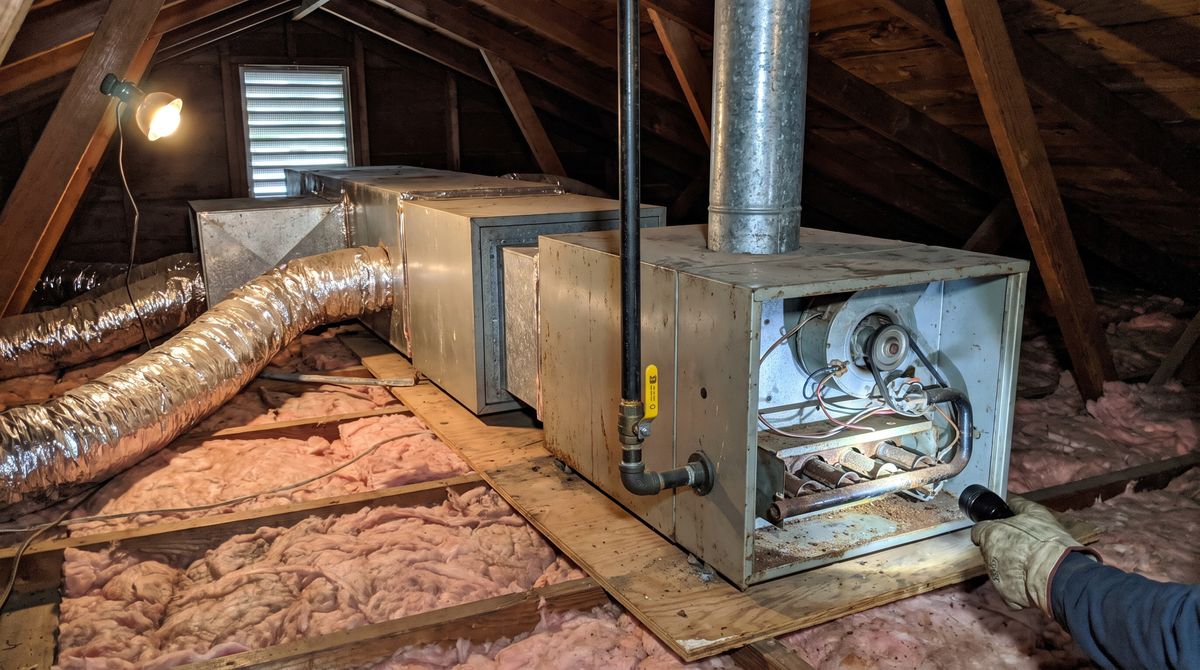
Heating in Los Angeles runs on a wide spread of equipment. A wall furnace from the 1930s and an attic furnace from the 1990s fail in different ways.
What the heater is doing, and what that often means
- The burners light, then go out. Often a dirty flame sensor, the small rod that tells the furnace's control board a flame is burning. With no signal, the board shuts the gas off after a few seconds.
- Nothing lights at all. Often a cracked igniter or a pressure switch that won't close. Less often, a gas valve stuck shut.
- A pilot that keeps going out. On wall and floor furnaces this is often the thermocouple, the sensor that holds the gas valve open while the pilot burns.
- Cold air from a heat pump. Often a reversing valve stuck in cooling, or a fault in the defrost control.
- A burning smell that won't clear. A dusty smell for a few minutes, the first time it runs in months, is common. One that stays, or smells of hot wiring, is a reason to switch the heat off and call.
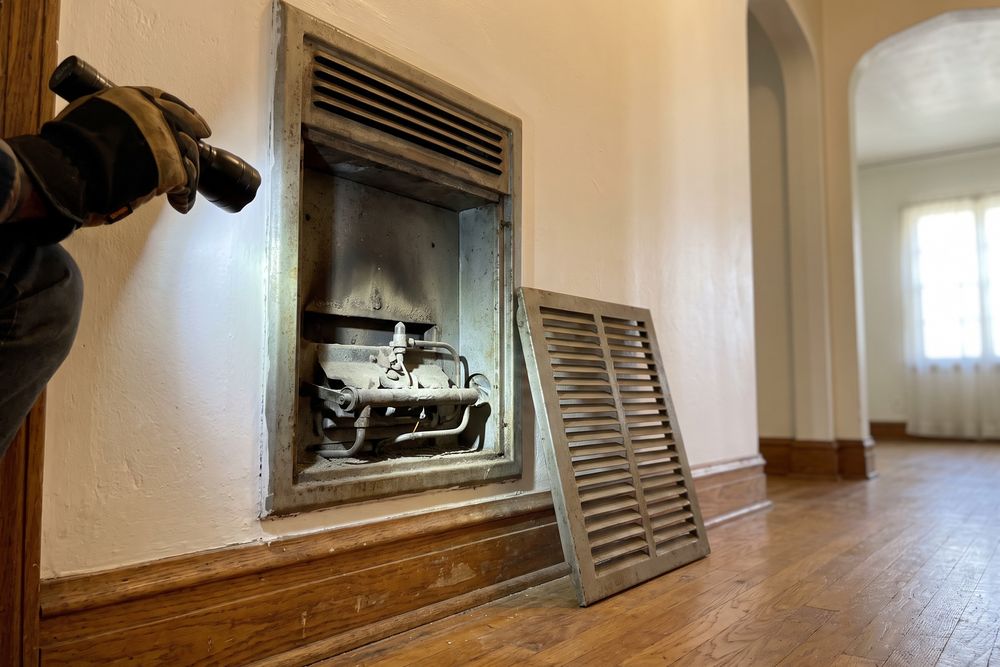
Pre-war wall and floor furnaces
Gas heaters from the 1920s to the 1940s are still at work in bungalows and duplexes across the city. We repair the pilot and the valve, and say in writing when one is past fixing. Parts for some older models are no longer made, and when that decides the job, the record says so.
The repair visit
- Visit fee
- $89
- We find the fault and write it down. The $89 comes off the bill if we do the repair.
- Arrival window
- 2 hours
- Sent by text, then a second text when your technician is on the way.
- Warranty
- 1 year
- Parts and labor on every repair and installation.
Nights and weekends cost the same as a Tuesday morning.
Two things to check before you call
The thermostat: set to Heat, above the room temperature, with fresh batteries if it takes them. The furnace filter: a clogged one can make the furnace overheat and shut down.
How a heating visit goes
- We text back within 15 minutes, 7am to 9pm, with a 2-hour window.
- Shoe covers go on at the door. Your technician runs the furnace through its start-up and watches each stage: the inducer, the igniter, the flame, the blower.
- About 45 minutes of tests in all, with the temperature rise across the furnace and every other reading written down.
- You get the record and the repair price in writing. Nothing starts until you say yes.
- Most repairs finish the same visit from parts on the truck, and the old part stays with you.
What the price depends on
After the visit fee, the repair price depends on:
- The part. A flame sensor or a thermocouple is small. A motor or a control board costs more.
- The kind of heater, and whether parts are still made for it
- Where it sits: an attic, a hall closet, under the floor or on the roof
- On a heat pump, whether a refrigerant leak has to be found first
What you get
The same written record as on every visit: what the heater was doing, the tests we ran and their readings, the part that failed, and what we checked and found sound. Anything we couldn't reach is listed with the reason.
If the repair-or-replace line comes out over 5,000, the record carries a replacement price beside the repair price, and you choose.
Questions about heating repair
Do you work on wall furnaces and floor furnaces?
Yes. We work on wall and floor furnaces, attic and closet furnaces, and heat pumps. Central air and mini-splits too.
Is an old wall heater worth repairing?
The same line applies as on any system: its age in years times the repair price in dollars. On a heater from the 1930s that line is crossed quickly, so you get both prices, the repair and a replacement, and you choose.
The heat went out at night. What does that cost?
The same as in the daytime. A visit at 2am on a Sunday costs the same as one at 10am on a Tuesday, and so does the repair.
Can you check a furnace that still works?
Yes. That is a tune-up, one visit with no plan to sign. Every reading goes on the record.